|
But one key unifying tactic since the 1990s has been ‘dumb’ aerial bombardment. The Sudanese Air Force simply rolls unguided bombs – usually basic HE bombs, occasionally napalm or cluster munitions, sometimes just barrels filled with explosives and shrapnel –from the cargo ramps of the Sudanese Air Force’s fleet of Soviet-made Antonov cargo aircraft on high-altitude sorties over rebel-held areas. They are sometimes followed up by direct-fire air-to-ground rocket attacks on both rebel forces and civilian villages by attack helicopters and ground-attack jets. But not always: SAF’s objective with its Antonov bombings seems not to be to degrade the scattered rebel forces, against which such indiscriminate, untargeted bombardment is wholly ineffective; but to cause just enough death, injury and jeopardy to force civilian populations sustaining those rebels to flee from their villages into caves, or swelling refugee or IDP camps.
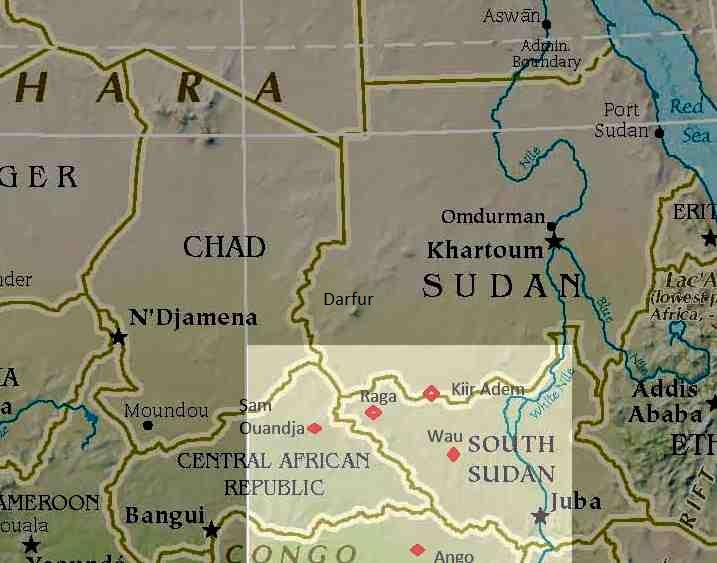
Best estimates suggest that this and other conflict tactics have displaced some 875,000 women, men and children across Sudan since January 2012 alone; including 275,000 in Darfur since the start of this year (nearly double the number in 2011 and 2012 combined). These fresh displacements have added to a burgeoning IDP population that may currently stand at some 2.5 million, and has at times during Sudan’s conflicts risen to an estimated 6.1 million (if we’re playing poker with human misery, Syria’s displaced population currently stands at an estimated 6.5 million). And one of the most common reasons for their displacement given by refugees flowing into South Sudan is summed up in a single word: “Antonovs”.
Regardless of its intention, the indiscriminacy of this tactic is plainly unlawful under international humanitarian law. And since 2005, “offensive military flights” of any kind have also been specifically forbidden in one region, Darfur, by a binding resolution of the UN Security Council, which also prohibits the movement into Darfur of the military aircraft and weapons used in such flights.
And yet almost every week since that resolution was passed, for eight years, the Sudanese government has violated this double prohibition with complete openness, and complete impunity. The Antonovs used for its ‘forbidden’ bombing sorties, week-in, week-out, are parked up openly beside the aircraft of the UN/AU peacekeeping mission at Darfur’s main airports, and loaded with bombs in front of UN personnel. (At El Fasher airport, Sudanese army personnel on occasion wheel the bombs to the Antonovs on superannuated Heathrow Airport baggage trolleys that are scattered about the airport, and have somehow made their way from South London to Darfur). Sanctions-violating Antonov bombing raids and helicopter airstrikes are as readily documented throughout Darfur as they are in South Kordofan and Blue Nile, and have been wearily reported to the Security Council by its own Expert Panel on Darfur every year since 2006, alongside documented evidence of regular new arrivals into Darfur of SAF Antonovs, Su-25 ground attack aircraft and Mi-24 attack helicopters. There’s absolutely nothing clandestine about this sanctions-busting.
The Security Council has been presented since 2006 with an annual barrage of evidence that its Sudan resolutions are being openly violated almost daily. Yet it has yet to strengthen the sanctions, save adding a modest and essentially toothless requirement in 2010 for states exporting arms to Sudan to get end-user assurances – of the kind that Sudan routinely violates in any case. It’s never even been able to agree to add any individual or body to its list of (sanctioned) Sudan sanctions violators since 2006. Sudan is not Iran, or Eritrea: it's neither sufficiently important for Council members to spend real political capital on unblocking opposition within the Council to tougher measures, nor sufficiently unimportant to avoid such opposition in the first place. So the Security Council’s Sudan dossier remains in complete stasis. And the export decisions of Sudan’s key circle of suppliers of military aircraft and their weaponry – Belarus, Ukraine, China and the Russian Federation – remain largely immune to international public censure.
So what can the international community do to undermine the capacity of the Sudanese government to wage unlawful aerial war against its own population? I think we probably need to stop pretending that embargoes or geographically-bound conflict prohibitions really work very well, even where they’re actually taken seriously by the international community. I’m not convinced that it’s possible to build a semi-permeable membrane around a state that catches arms and aircraft going in, human rights abusers coming out, and lets everything else pass. Certainly not in Sudan. But what we can do instead is look at the leverage the international community has over the key things that sustain particular egregious military tactics and technologies – their supply chains.
In the case of Sudan, there’s repeated condemnation of Antonov aerial bombardment from human rights organisations, the UN, and governments; but very little scrutiny of the commercial and legal leverage that the international community has over:
- The international logistics of the supply chain for technology itself: how Antonov transport aircraft, and aircraft munitions (bombs and rockets), are supplied to Sudan;
- The domestic logistics of these supply chains within Sudan;
- The skills and supplies needed for the maintenance of these aircraft;
- The airside services that sustain these aircraft on the tarmac.

These international actors are, in general, acting entirely within the law (I'm making no allegation that the companies or organisations named below are complicit in, or responsible for, embargo violations or international crimes; and I’ll leave the question of morality to the theologians). But European countries and intergovernmental organisations often have jurisdiction and influence over their activities nonetheless. Here's what they could do.
(N.B. Much of what follows is based on research undertaken last year for this Small Arms Survey paper. The Small Arms Survey is, of course, in no way responsible for the opinions and analysis below.)